
According to 1stDibs annual consensus, the softer sensation and brighter colours will conquer the users in the new year of 2024.
Each fall the online marketplace 1stDibs reaches out to the designers and industry professionals who rely upon the site-a goto for finds ranging from 18th-century Louis XVI sideboards to Ettore Sottsass consoles-and asks them about the future. More than 600 designers around the world answered the call to offer their insights on what’s hot for 2024 interiors.
Chocolate brown is on the way up
When it comes to the colours designers say will rule in 2024, chocolate brown, it seems, will be winning: Compared to last year, the sultry hue jumped from sixth to third place for most-favoured color, with 21% of respondents anticipating it as the shade for the new year. Earthy tones like burnt orange and mustard followed.
A blue shift
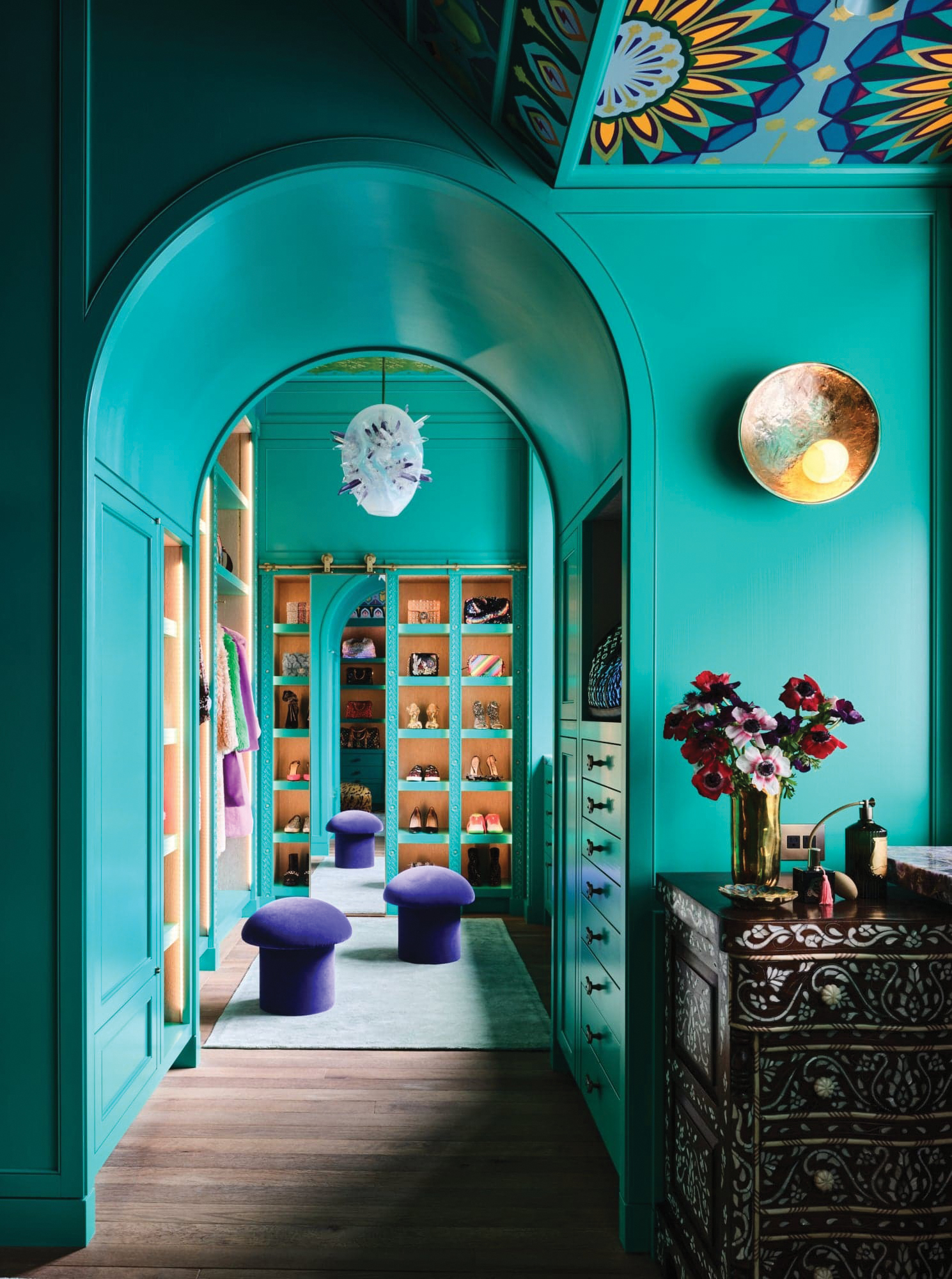
In the blues family, robin’s egg is soaring, almost reaching the heights of cobalt: 24% of designers like the former; just under 25% prefer the latter. Both rank slightly above navy, which was the preferred shade for 23% of designers.
It’s still easy being green
According to this survey, green will continue its multi year reign in 2024 interiors, the survey says. During the pandemic the idea that elements of nature that people found soothing were increasingly incorporated into people’s interior schemes. And this trend hasn’t solely been limited to colour: Floral and plant motifs came in as the survey’s most popular patterns for 2024. The need to live amongst this verdant kind of environment is why the colour green resonates. In the past three years, emerald has come out on top. For 2024, however, the jewel tone has been supplanted by a sage green, 26% to 23%. Sage feels a little more timeless.
Texture takes the lead
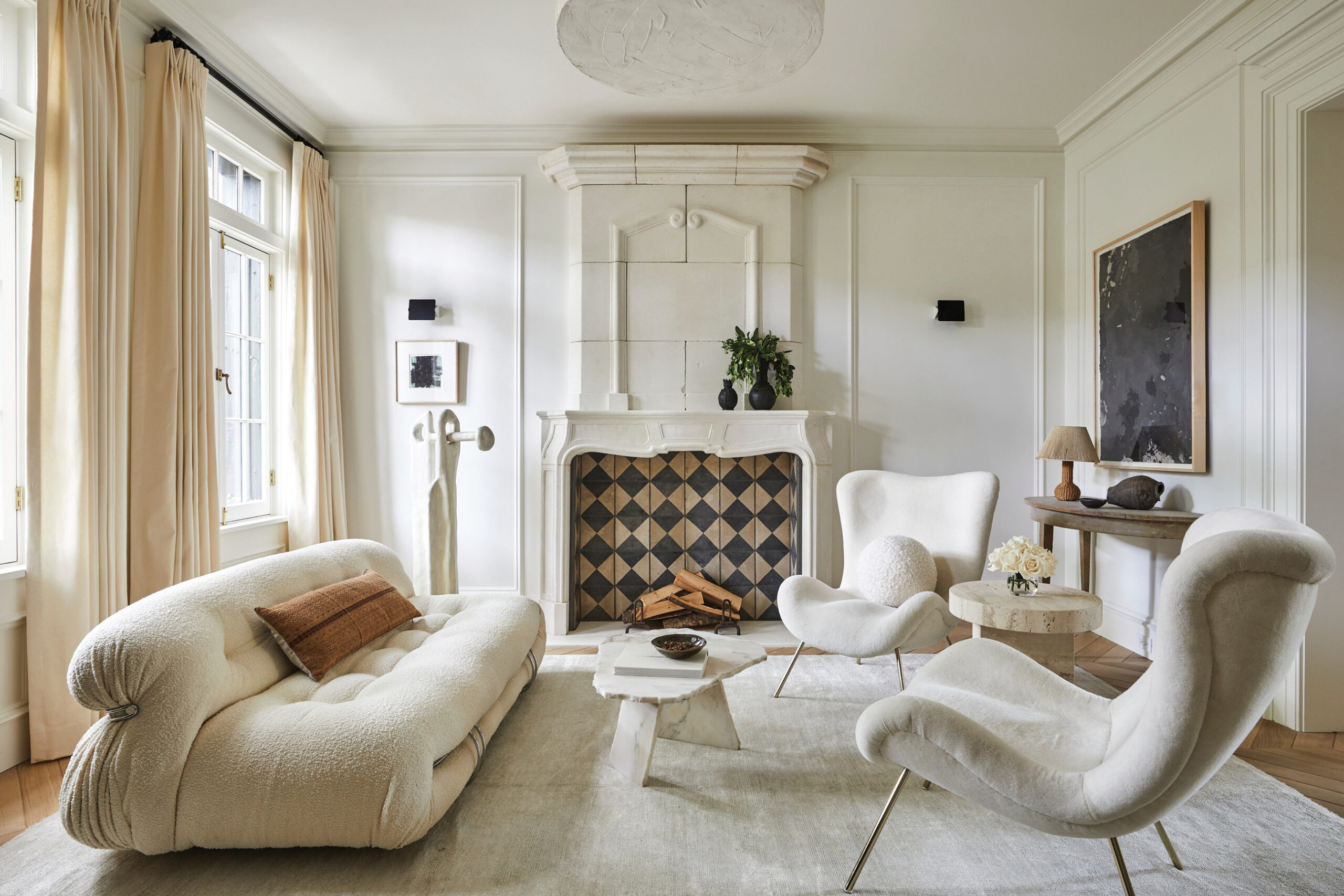
Limewash came in as the number one choice for popular materials and finishes among surveyed designers. “It feels softer and enveloping,” Barzilay Freund explains. Ceramic/terra-cotta (21%) and blond wood (19%) carry on that warm trend.
Objective futures
Designers report feeling both cautious and optimistic about the future. Three-quarters of respondents said budgets and cost increases due to inflation will significantly impact projects. A whopping 91% have resisted using AI in their work, with 75% expecting this reticence to continue into 2024. And 67% say the supposed NFT and digital art boom was actually a bust, with little impact on the vibrant market for abstract, contemporary, and modern art markets.
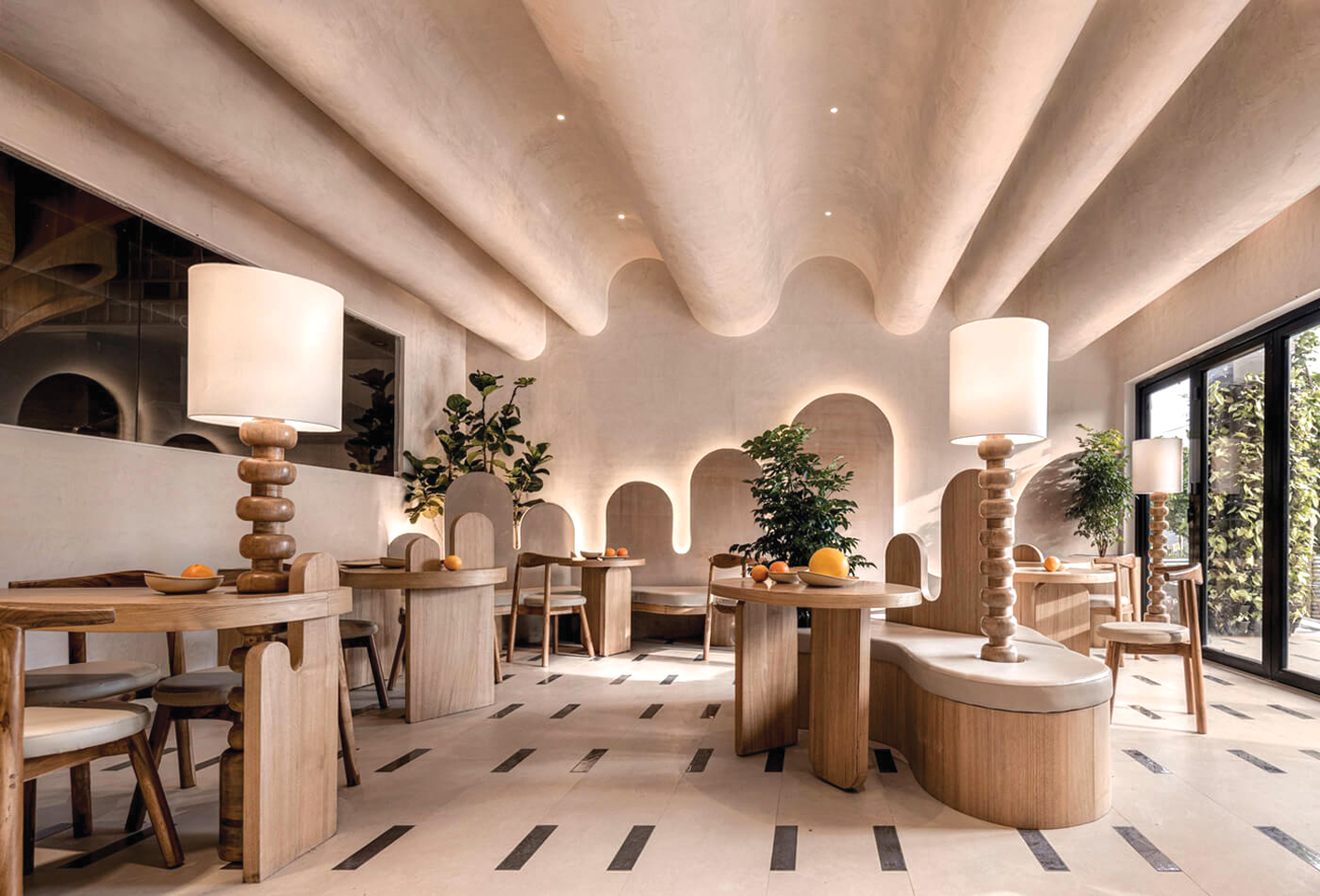
In 2024, it’s about taking the curves: A third of respondents praised irregular shaped furniture (32%). And finding patterns: 29% percent of designers anticipate patterned wallpapers will remain popular. (A quarter of respondents expect to see these wallpapers being installed on ceilings in the new year. The designers are betting on the adoption of modernist style of the last century and Scandinavian style in 2024. They will also follow minimalism and maximalism. Each of the these movements gain over 30% votes for what will happen in 2024.
Icons of design
While popularity has seen a slight dip since 2021, Eames chairs, Serpentine sofas, and Wishbone chairs still top the charts, followed by increasing interest in Barcelona chairs, De Sede Snake sofas, and Scarpa Soriana seating. In lighting, Murano glass pendants and chandeliers, Noguchi lamps, and luminaires by Ingo Maurer ranked among the most anticipated for the new year.
What else? Eye-catching colours like bright red, neon yellow and brilliant orange seem to be rejected, only favoured by 5% of designers. Taste for lavender also decreased by half compared to the previous year. Harder, cheap-and-cheerful accessories like checkprint rugs lost over half its popularity since last year, and disco balls and neon signs are among the least likely to be featured. Edginess is out, with geometric shapes dropping 18% in popularity since last year.
Only 1% of designers expect gingham to be popular in 2024. Though other natural elements like florals and plants will thrive in 2024, butterfly and insect styles seem to be nearing extinction: 16% of designers predicted the styles would dominate in 2022 and 2023, while only 4% see them doing so in the new year.
Anthony Barzilay Freund – 1stDibs’ Editorial Director