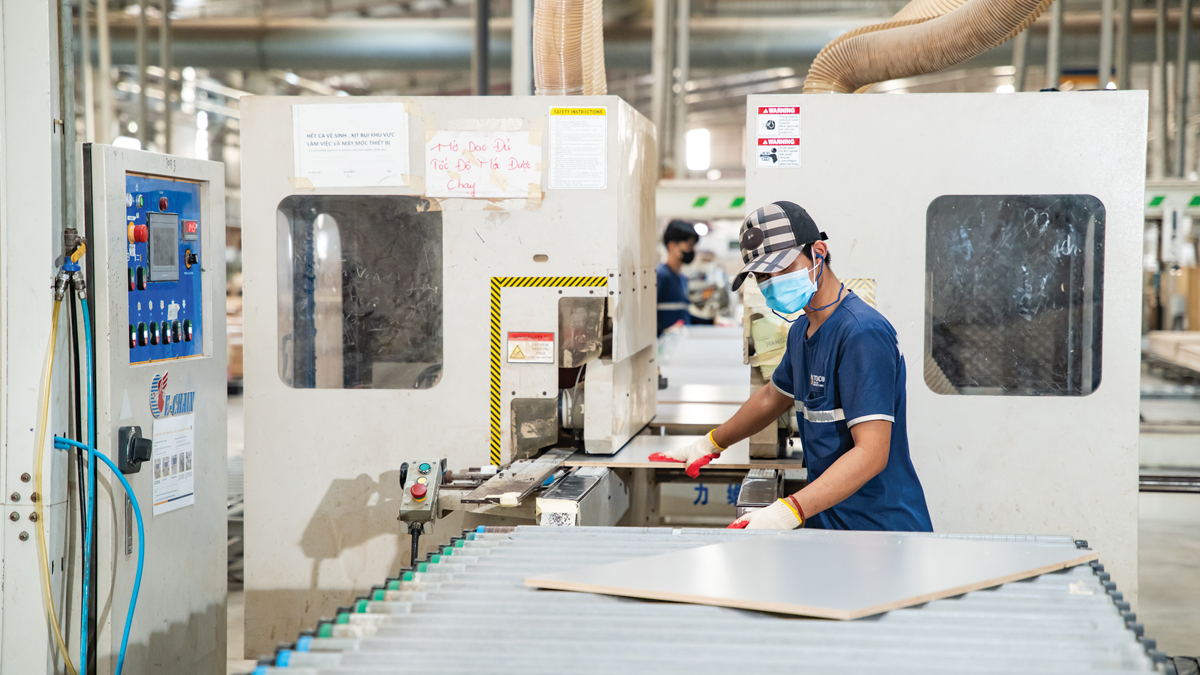


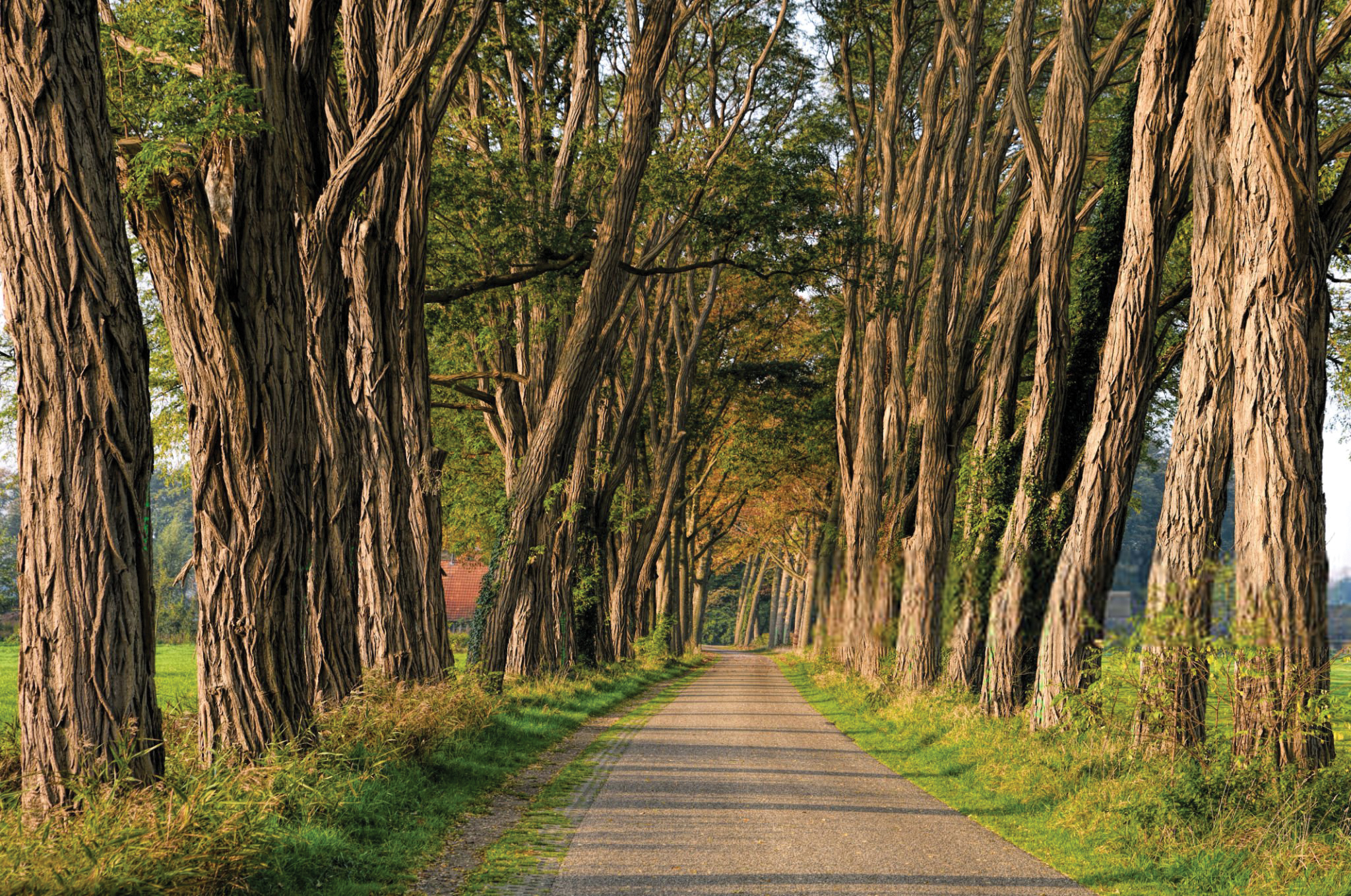
Acacia has become the most important wood supply for Vietnam’s processing industry. the room for greater growth is high, especially in creating the added values for the products and in expanding the market.
In the report issued in 2022 by Ministry of Agriculture and Rural Development and General Statistics Office of Vietnam, Vietnam currently has 4.73 million hectares of planted forests, the majority of them acacia, distributed widely in the Northeast (1.4 million hectares), Northern Central (0.9 million hectares), Southern Central 0.8 million hectares). In 2022, Vietnam harvested approximately 20.6 million cubic meters of planted forest to be used in making products such as in-exterior furniture, plywood, MDF, wood chips and pellets.
Opportunities abound
Now acacia wood has been a relatively popular choice amongst furniture exporters in Vietnam. Besides, the wood can replace certain imported woods being used to manufacture exported goods. The current issue lies in the fact that promotion works for this supply are not properly performed. At the same time, the green consumption trends in the global markets are opening up a lot of opportunities for this wood. Creating a brand for this wood with various strengths such as legality, sustainability, a livelihood for the poor ethnic peoples, or greening the bare lands… In Vietnam’s major export markets can allow such products to potentially expand.
In tandem with exports, the opportunities are large in the domestic market. At least there are major three potentials for the wood; including the interior items acquired using the public budget for hospitals, schools, governmental bodies. These products can totally replace the plastic products, or products of natural or artificial woods.
Each year, Vietnam imports more or less 2 million cubic meters of natural woods, some of them very precious, from almost 30 tropical countries. Most of them are used for making locally consumed products, particularly in the traditional artisanal villages such as Đồng Kỵ (Bắc Ninh province), Vạn Điểm (Hà Nội), La Xuyên (Nam Định province). Another imported amount will be used for construction. The imported natural woods with certain legal risks have been generating a negative image for the industry and negatively affecting the export.
As for pellets, currently their supply by the businesses operating in Central Vietnam to the North consists mostly of the branches, tops, spare woods… from planted woods. So far most of the pellets are for export. However, in the context of the Government of Vietnam’s commitments to reduce emission, replace high-emission materials with greener power sources, the pellets are presenting a huge potential to become the replacement for the coals being used in the power plants and boilers in the production facilities. The rising demand for pellets will help improve the position considered of planted wood supplies.
Transforming potential into reality
Exploring the breakthrough potentials of acacia wood in the future calls for the collective efforts of those involved, from the managerial bodies to business associations. The connection model established between the wood manufacturers and the growers help provide access to the strong wood strains, advanced cultivation methodologies, thus increasing the output’s quality. The government shall also need to implement stricter measures of control upon the seed distribution, to minimise the current situation when the seeds are in much less control. Enhancing the forestry works would also help the growers with better access to technology knowledge.
Enhancing the added values through creating deeply processed products requires the participation from local levels, where large areas of wood are grown, to decide upon the attractive policies, incentives. Such can include reduction of land rentals, building proper infrastructure, tax incentives to help establish a wood ecosystem, and a network between the growers and the companies…
Like said, it is fundamental to promote acacia wood in the export markets. This promotion can be realised by the network of trade offices, the international fairs. Domestically, public procurement policies should prioritise purchase of products made of acacia wood, with certificate of origin. Besides, the Government needs to more strictly control the risks from imported woods while giving more opportunities for the local woods. Moreover, there should be unique mechanisms implemented to restrict the high emission facilities still using coal, encouraging use of green energy, and replacing the high-emission materials with pellets.
Simultaneously implementing these mechanisms, policies and actions shall help transform the potential of acacia wood to reality. Once achieved, the local manufacturers will greatly benefit. Because the native material supply will create a sustainable edge in global competitions.
By Xuan Phuc To
Forest Trends, Policy Analyst