

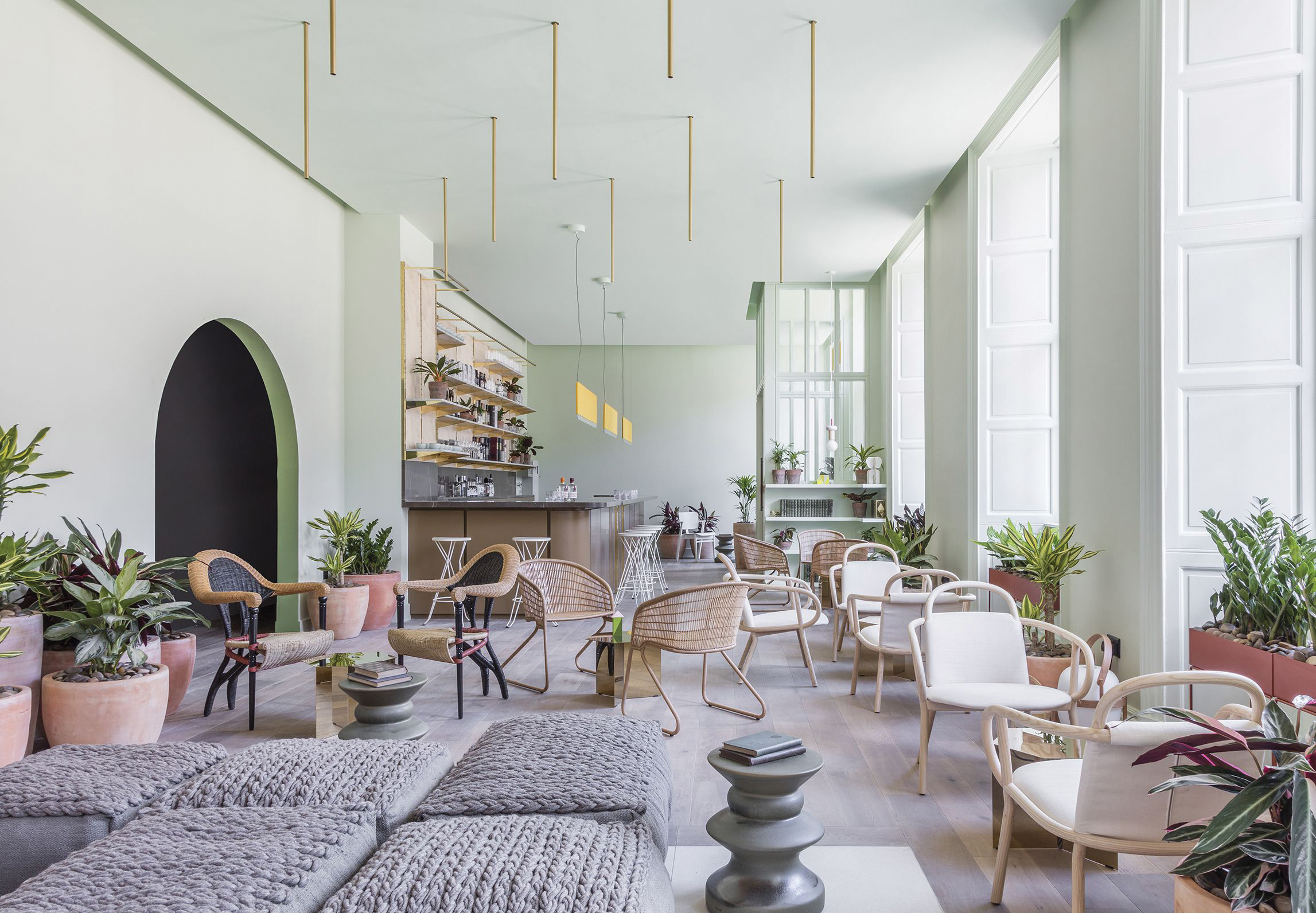
As the real estate market declines, consumer spending on furniture plunges deeply, and vice versa. However, there are still options for furniture businesses not to depend on this rule.
The furniture market has various segments, but consumption is broadly divided into two categories: household furniture for residential areas and commercial furniture for institutions such as hospitals, schools, hotels, and offices.
Differentiation Creates Opportunities
Divani designs was founded 18 years ago. initially we focused on supplying residential furniture. However, after nearly two decades in the industry, I realized that any sector related to households, individuals, residential properties, etc., is closely tied to the overall economic health. This means that when the real estate market grows, the business of household furniture flourishes, and vice versa. This dependency is almost 100%. This pivotal point led Divani Designs to decide to shift direction.
While still in the furniture sector, we chose not to, or too much rely on the fluctuations of the economy, thus focusing on commercial furniture. Despite economic conditions, institutions must maintain and sometimes expand their operations due to global population growth. Although this business segment is also affected by economic fluctuations, it only slows down rather than stagnates or declines like household furniture.

The significant difference between these two business segments became apparent during the Covid-19 pandemic. While the commercial wood furniture market in the United States experienced a slowdown in recent years, it continued to grow. In fact, a recent report on the furniture industry in the U.S. highlighted significant growth in 2023, especially in hotels, restaurants, etc., with a growth rate 1.8 times higher than the previous year. This growth translates to an increase of over 240,000 rooms compared to the same period in 2022.
This substantial figure presents significant opportunities for furniture suppliers. The challenge lies in how Vietnamese furniture companies can access this market.
Increasing Competitive Advantages
In 2023, according to data from the General Department of Customs, despite a 15.6% decline, the United States remained the main export market for Vietnamese furniture companies. Furniture exports to the U.S. exceeded $7.3 billion, accounting for over 54%.
Although surpassing China to become the largest furniture supplier to the U.S. market, Vietnamese furniture still lacks the sustainable position and substantial profit margins compared to China. Observing large furniture fairs in China, it’s evident that companies there are highly attuned to the aesthetic preferences of the furniture export market and other household items. When China prepares to engage with the West, they deploy strategies to explore and understand the market’s preferences thoroughly to meet demand appropriately. Chinese companies have long hired international design teams, focusing directly on target markets. Additionally, many Chinese companies have invested significantly in design and creativity to own unique fabric types or accessories that no other company can produce. This represents a significant gap that Vietnam may take considerable time to bridge. However, without starting, this gap will never narrow. Increasing the creative content is the only way Vietnamese companies can equip themselves with a competitive edge in the international market.
Recent observations of manufacturing plants in Vietnam affirm that Vietnamese furniture companies have significant capacity and potential to supply high-class hotels and projects worldwide. However, the era of merely investing in production capacity and waiting for orders is over. Vietnamese companies need more significant endeavors, focusing on overall competitive capacity from production capability, design capacity to brand value. Alongside Thompson Huynh Interior Services, I will share detailed experiences in winning customers across our operation at the webinar “Joining the Supply Chain and Manufacturing Furniture for Hotels in the United States”, scheduled for March 7, 2024.
Expanding into the global market requires proactive measures. The simplest, first, and easiest way is for company owners to venture into and facilitate opportunities for employees, technicians, designers, etc., to access the target market. You can’t imagine the vast market through a few partners placing orders. The real opportunities for Vietnamese furniture companies lie beyond the subcontracting orders they’ve been doing for so long.
Specific Considerations
The commercial wood furniture market has much potential but also specific considerations. For instance, in the hotel segment, companies must understand who the buyers are, decision-makers, payers, etc. Hotel conglomerates always have their regulations from management units, operational units, ownership units… Companies need to understand the hotel’s buying system before considering exporting furniture to the U.S.
In serving projects, apart from wood furniture, there are also electrical appliances, ironware, plastics, spare parts, components, etc. Vietnamese companies are weak in providing comprehensive packages, only focusing on their products, while customers have to provide the rest. Expanding their ecosystem, connecting with many companies to create a supply alliance like decorative items, electrical appliances, household items, etc., will enhance their customer service capability, giving them a competitive edge.
Vietnamese companies are slow in quoting, not having established a standard quotation framework. Each project has its budget; once quoted, companies should stick to the price until the last day. Changing prices will force customers to redo paperwork, requiring approval from 2-3 levels, which is very inconvenient, making it difficult for companies to retain partners. The production time of Vietnamese companies is usually longer than other suppliers. Moreover, frequent delays in delivery occur. This creates difficulties for projects related to construction teams, warehouse teams, banks; changes in logistical cost and many others. Addressing this issue is essential for Vietnamese companies.
Hoang Thang Long
Divani Designs, United States – Member of VIB Global






![[Lễ giỗ tổ ngành mộc 2026] Hành trình thăm & Cảm tạ tổ nghề 3 Miền](https://hawa.vn/wp-content/uploads/2026/01/le-gio-to-nganh-moc-2026-hanh-trinh-tham-cam-ta-to-nghe-3-mien-01.jpg)