
According to Mr. Nguyen Huu Thong, the key of the industry lies in uniting sustainability, quality, and competitiveness—enabling businesses to establish direct export channels and thrive in international markets.
* Having entered the industry in 2014, what inspired you to choose wood as the foundation for your startup?
– I graduated with a degree in economics and initially worked in sales and marketing. However, as I became fascinated with supply chain dynamics, I dreamed of manufacturing – creating products directly for the market. Recognizing the immense potential in the wood industry, I decided to take the leap. Hoang Thong started with laminated board production. We navigated many challenges while gaining valuable industry insights, these experiences laid the groundwork for our expansion.
* After ten years, with seven factories, one sawmill and drying plant, five finger-joint board factories, one furniture factory, a production area exceeding 130,000m², and a workforce of 3,000 – do these milestones bring you satisfaction?
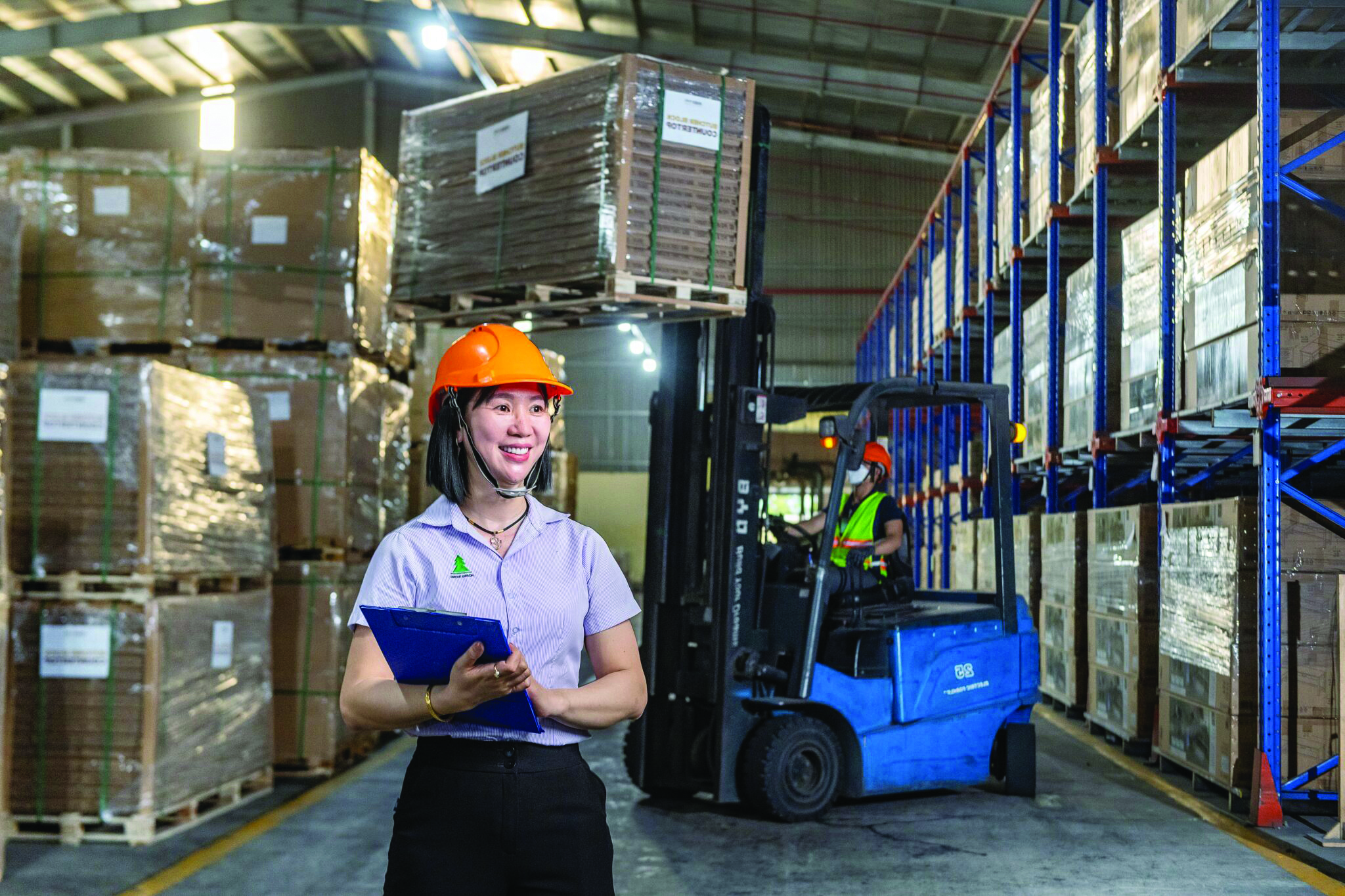
– It has been a relentless journey. After overcoming initial struggles, Hoang Thong experienced rapid expansion, opening a new factory every year. However, when we reached nine factories, the COVID-19 pandemic forced us to consolidate. We responded by refocusing on scaling our furniture production plant, achieving annual revenue of VND 2,000 billion, with VND 500 billion from direct exports.
* What is the secret to Hoang Thong’s rapid growth?
– Hoang Thong prioritizes proactive production and follows a closed-loop model. From the start, I committed to rubberwood – a renewable, locally sourced material. Currently, 100% of our products, from boards to furniture, are made from rubberwood.
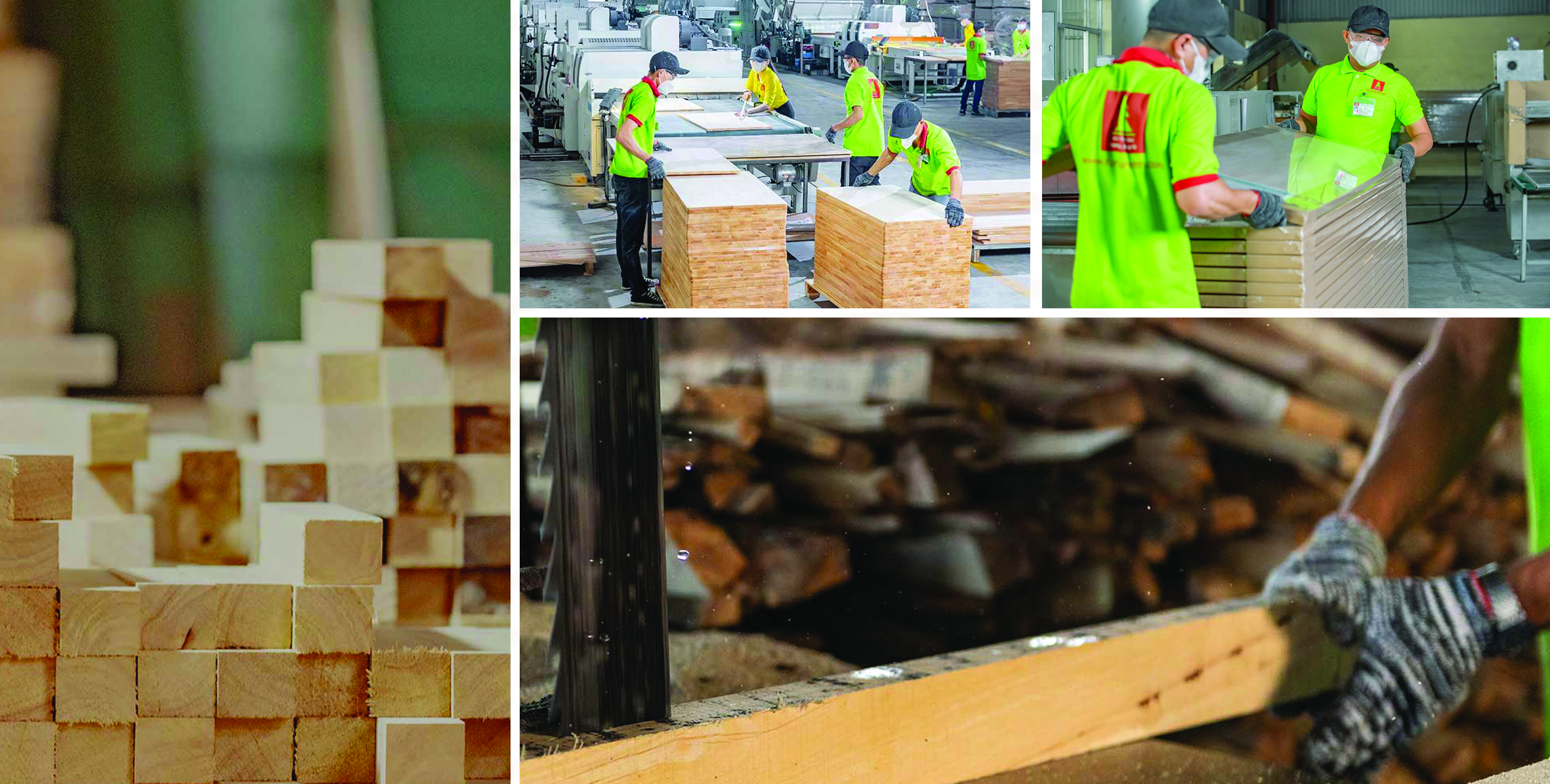
Rubberwood is harvested at the end of its latex-producing cycle, posing no threat to natural forests. With U.S. consumers increasingly favoring eco-friendly products with sustainable certifications like FSC (Forest Stewardship Council), rubberwood furniture aligns perfectly with this green trend, giving Vietnamese businesses a strategic advantage.
While many consumers still prefer traditional hardwoods, we are steadily shifting customer perceptions. Our commitment to this path remains unwavering.
Despite our achievements, we aim to grow sustainably. Our goal is to complete the production chain by collaborating with 30-40 satellite suppliers, boosting our collective capacity. We are pursuing both loose-item and ready-to-assemble export models, trimming intermediaries to maximize profits.
* What do you see as the potential of the U.S. market?
– It was not until 2023 that we deeply explored the U.S. market. To establish a foothold, we set up a U.S.-based company, leveraging local warehouses and logistics through Chinese-American partners. This helped us expand customer reach and gain market insights.

To truly compete, I personally attended exhibitions, invested in market data, and studied trends meticulously. We identified a substantial demand for kitchen cabinets and flooring in both B2C and B2B segments. However, this opportunity comes with high barriers – requiring serious investment and adaptability.
* What advantages do Vietnamese furniture businesses have in accessing the U.S. market?
– Vietnamese businesses are diligent, creative, and adaptable. However, to bypass intermediaries and sell directly in the U.S., companies must invest heavily in market research, build strong partnerships, and establish their own brands – otherwise, they risk competing solely on price. One major competitive advantage is our use of sustainable materials, aligning with the global shift toward greener future.
China remains a formidable competitor with vast production capacity, advanced logistics, and strong industry cohesion. Yet, we believe Vietnamese companies can differentiate themselves through quality, innovation, and unique strategies.
With policies like MAGA encouraging U.S.-based job creation, Vietnamese companies may find success adopting hybrid strategies – producing cost-effectively in Vietnam while establishing R&D, market research, and logistics hubs in the U.S.
For Vietnamese businesses to thrive internationally, they must prioritize quality, brand building, strategic partnerships, and continuous learning. Although the Vietnamese furniture industry lacks a fully integrated ecosystem, collaboration with experienced Chinese companies can accelerate growth and facilitate knowledge sharing.
The global furniture market is vast, yet Vietnam’s wood and wood product exports account for less than 10% of global demand. To increase market share, we must foster collective development. By building shared value chains, businesses can negotiate better, strengthen supply chains, and seize global opportunities. By prioritizing collective prosperity, Vietnamese enterprises can journey further – together.
* Thank you!
Interview by Minh Khue