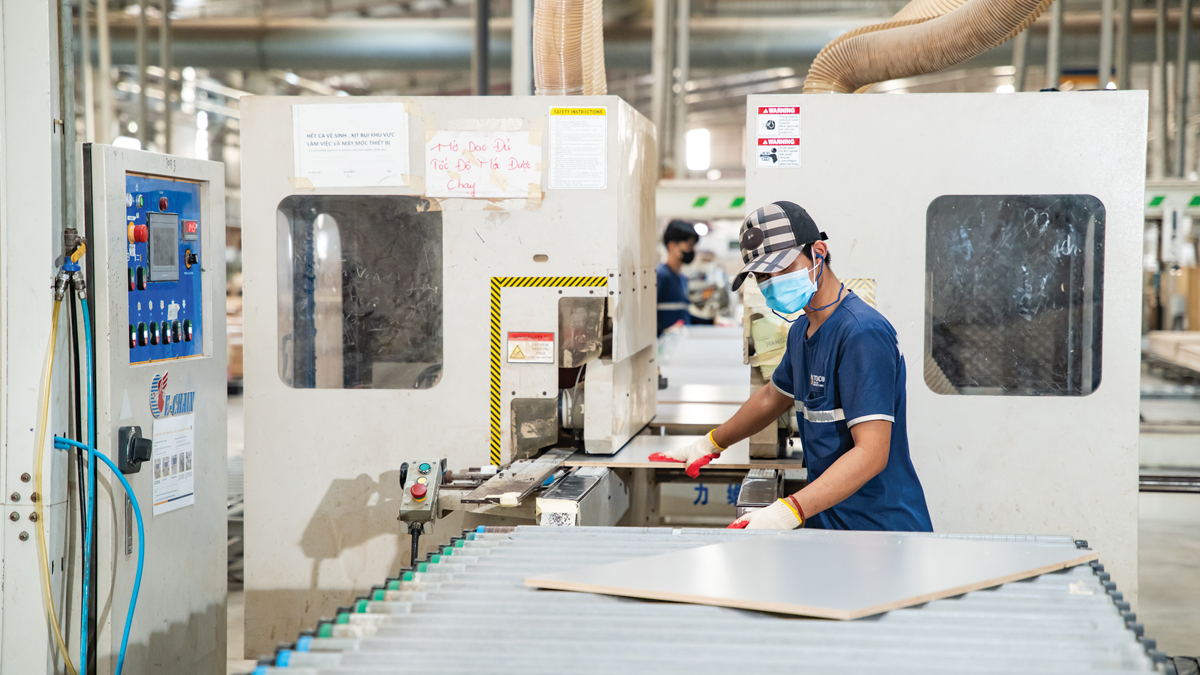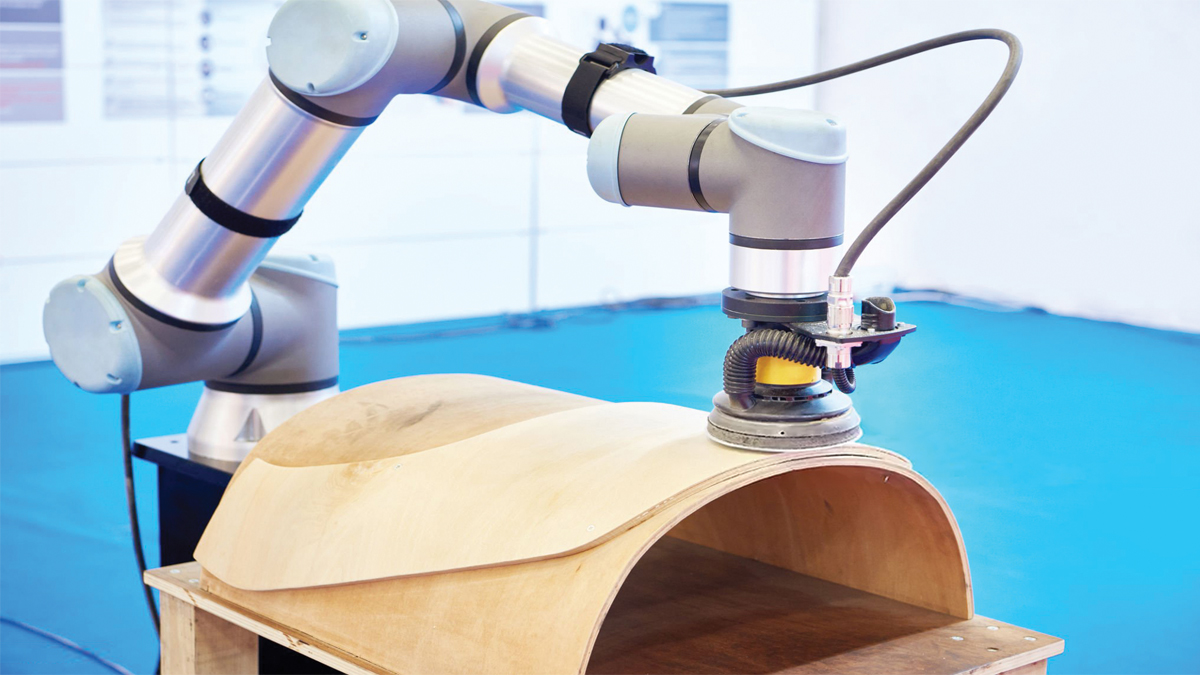

Once perceived as a value-added solution, digital transformation has turned into a crucial element for survival. according to mr. bao tran, head of vietnam administration of forestry, the government will mobilise the maximum resources in support of the local businesses.
* According to the 2022 Annual Report of Digital Transformation compiled by the Enterprise Development Agency, the number of businesses undergoing digital transformation with a dedicated budget has increased. The local businesses are transcending beyond the growth phase and towards the advanced transformation, despite a lot of hurdles. In the wood industry, how has the transformation been built?
– Digital transformation is a fundamental solution providing the motivation for the wood processing industry’s overall growth, that of the forestry in particular and the society at large. Once perceived as a valueadded solution, digital transformation has turned into a crucial element for survival.
In reality, the transformation will engender creativity, renew the business model and operation of the business, to catch up and increase competency, based upon the digital innovations. The transformation is not only a growth solution in production, but also an efficient solution to increase the promotion and distribution of the products towards more customers, optimise sales, administrative works, payment, and customers’ experience.
Besides, digital transformation will create the momentum for greater connection, information and data sharing amongst businesses, between the managing authorities and businesses and associations…
* However, viewed backwards, digital transformation would pressure the business into improving their products, with aims towards sustainability and greater response towards the diverse customers’ demands?
– It is the very challenge faced by the local businesses. Once they are able to respond, the businesses will definitely gain more competitive edges. Let’s think of an expanded environment both in business and production in the digital space, where the customers will definitely be exposed to a wider range of choices, a better capacity for interactions with customers, to truly optimise the products. Also, the transformation will help make the production transparent, the resources guaranteed legal, creating a platform for green transformation and the increasing demands from the global markets.

In the coming time, issues of traceability, green production will be strictly controlled by the international markets. Consumers with a penchant for wood and forest products will be able to trace their origins and explain their legality, and how their production is not the result of deforestation or degradation; instead the green products with low gas emission.
* So, businesses will have to equip a digital mindset amidst the fast-changing economy of nowadays?
– Digital transformation, digital society, digital economy are still new definitions, and the irreversible trends of today’s world. Digital transformation is not only a change of methods, but also a change in mental processes, habits, operations and the business culture itself. Therefore, the digital transformation all begins with the mind. Because it does not come from the managing authorities or associations, instead from the businesses, their leaders who have to see the impacts of such transformation towards competitiveness, market development and expansion, revenue increase and profits in the market.
* Does the Administration offer any programs or activities in support of digital transformation in particular and regaining momentum for the industry upcoming?
– In the coming time, the global economy’s recovery rate remains slow, expected at 2.9% in 2024, which will directly affect the wood processing industry, forestry and manufacturing of non-essential products. So, in order to support their recoveries, the Administration shall offer consultancy to the Ministry of Agriculture and Rural Development to direct the relevant units in promoting the businesses’ markets locally and internationally, through the network of trade counsellors, embassies located in some key markets. Coordinating with the competent authorities to help the businesses effectively explore the signed free trade agreements. Mobilising all the resources possible to organise exhibitions and showcases of their products.
Organising visiting groups to foreign wood and forestry expos. Also negotiating to expand cooperation in growing planted forests, processing, exploiting wood and creating forest products in some key markets.
The support activities to help the businesses approach digital transformation, green production, use of traceable wood materials of great urgency now. For instance, when promoting raw wood with sustainability certificate and planting area codes by effectively implementing Sustainable Forest Management Project and Forest Certificate, the Administration shall mobilise the resources to help the digital transformation, green production, building an explanatory database for legal woods, and their production not a result of deforestation or degradation; defining the emission level of greenhouse gas.
Furthermore, the Administration shall assist the businesses in removing the trade and technology hurdles, closely pursuing the trade lawsuits; releasing the businesses from refunding the VATs; reforming administrative procedures to create favourable conditions for the investors to invest, process and trade forest products.
* Thank you!
By Quynh Huong