
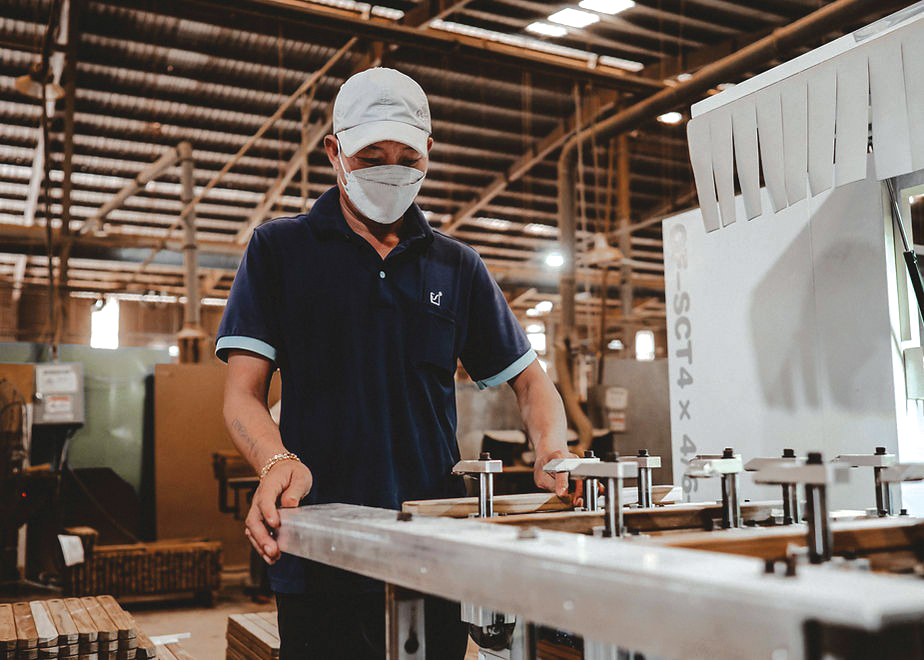
Currently, most clientsin the wood processing industry have not required manufacturers to reduce carbon emissions. For wood processing enterprises, practicing emission reduction and conducting greenhouse gas inventories at this stage is a proactive step that reflects a forward-thinking business mindset.
From 2023 to 2024, furniture companies nationwide have faced common challenges related to orders and compliance with timber exploitation and processing regulations.
Competitive Strategy
Domestically, government policies have tightened in areas such as taxation, social insurance, and environmental standards. Internationally, customers are intensifying inspections of management systems by increasing , traceability, and introducing new sustainability requirements.
In spite of these challenges, the wood industry has witnessed a positive shift: more furniture companies are adopting green practices. Companies like Happy Furniture, Tran Duc Home, and Nghia Son have gradually implemented greenhouse gas inventories. In the northern and central regions, many wood processing enterprises are actively reducing emissions. Sustainability is now viewed as a competitive strategy.
The textile industry’s loss of orders to Bangladesh, due to a lack of sustainability standards, serves as a stark warning. This loss , prompted wood enterprises to embrace green transition goals more readily. Even though clients in the wood sector currently do not require greenhouse gas inventories, Vietnamese businesses recognize this as an inevitable target.
Proactive Control
In 2020, the European Commission approved the Green Deal, aiming to reduce net emissions by 55% by 2030 to match levels in 1990. Additionally, they aim to achieve carbon neutrality by 2050. At COP 26, Prime Minister Pham Minh Chinh pledged that Vietnam would reach net-zero emissions by 2050. In preparation, the Ministry of Industry and Trade has listed 60 enterprises that are required to conduct inventories to accelerate the transition.
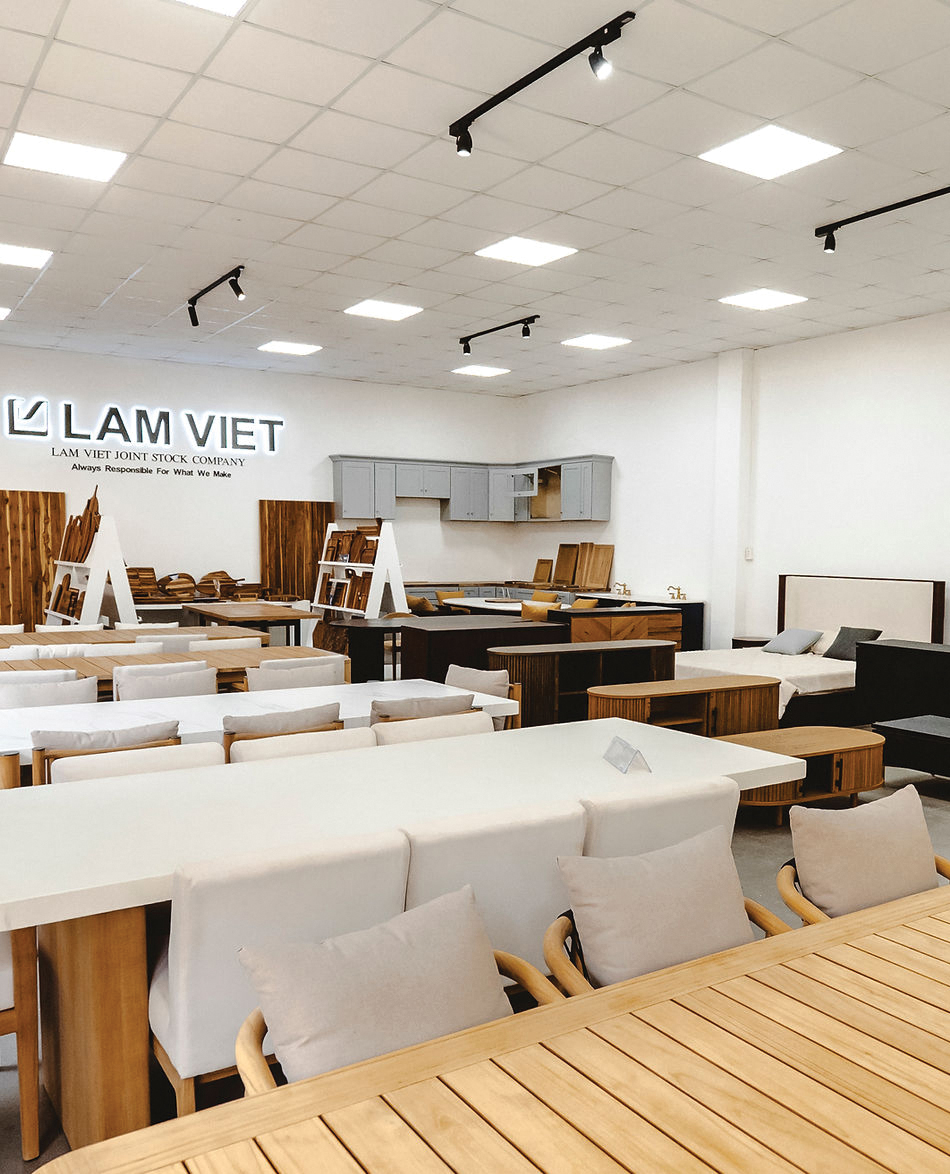
With over 22 years of development, Lam Viet is a major supplier with a production capacity of over 120 containers per month. Although not on the mandatory inventory list, Lam Viet voluntarily undertook this task.
Initially, they were confused by the unfamiliar concepts. Management anticipated a complex process, but once they started, they realized that emission inventorying was essentially about data collection and optimization. With third-party consultation and measurement, their inventory process became more effective. They discovered that data accuracy was key to successful emission measurement.
Fortunately, Lam Viet had already implemented an ERP management system, so energy consumption data was readily available. This simplified energy consumption reporting. Launched at the end of 2023, the company completed its Phase 1 and Phase 2 greenhouse gas inventory reports within three months. Due to the complexity of electricity consumption data in Phase 3, it took an additional six months in early 2024 to finalize the report. In 2023, Lam Viet’s total energy consumption reached 9,137.761 m3, emitting 3,762 tons of CO2.
In manufacturing, 96% of emissions come from electricity consumption. Thus, energy savings directly contribute to emission reduction. Lam Viet implemented electricity-saving principles by, integrating IoT and energy monitoring devices. In 2023, by reducing electricity consumption by 4%, the company saved VND 1.2 billion in electricity costs. For 2024, they aim to reduce electricity use by 20%, excluding planned solar energy adoption.
Throughout the inventory process, Lam Viet learned the importance of workforce preparation and defining tasks within each scope. Businesses need detailed input data, accurate coefficient lookups, and a comprehensive inventory database beyond software tools. While these challenges are initially difficult to address, once familiarized, the process becomes much simpler. The most crucial factors are leadership commitment, consistent communication with staff, and technological competence. Management software is invaluable for inventorying.
As mentioned, the green transition is no longer just a trend but a necessity, directly tied to branding and competitive advantage. Therefore, this task must be integrated into corporate strategy. The wood industry, closely linked to afforestation and sustainable materials, stands to gain significant advantages when emission reduction efforts are combined with carbon credits.
Certification for Sustainable Vietnamese Products
On February 21, Prime Minister Pham Minh Chinh signed Directive No. 17/CĐ-TTg, emphasizing proactive measures to promote circular economy practices, sustainable production and consumption, and green trade to meet European policies. This is crucial since Europe is Vietnam’s third-largest export market.
According to the Prime Minister, while the EU Green Deal poses significant challenges to Vietnamese exports, comprehensive green transitions offer long-term opportunities, enhancing competitiveness and market expansion. He instructed the Ministry of Industry and Trade to prioritize institutional improvements, focus on circular economy standards, and provide technical support to encourage businesses to shift to sustainable production and business models.
The Prime Minister also urged the Ministry to build and support certification and eco-labeling activities for sustainable products, ensuring compliance with market requirements and international regulations.
By Nguyen Thanh Lam – CEO of Lam Viet