

According to Statista, the global furniture market is expected to generate $1.354 billion in revenue by 2024, with an anticipated annual growth rate of 2.70%. Ranked sixth globally, Vietnam’s furniture industry is undergoing a rapid transformation as businesses within the ecosystem evolve to capitalize on new opportunities.
Today’s consumers demand furniture that not only meets aesthetic standards but also prioritizes functionality, convenience, and environmental friendliness.
Adapting for Competitive Advantage
Recognizing this shift, Nguyen Van Thu, CEO of Thanh Tam, has strategically positioned his company to proactively research market trends, develop business strategies, and invest in technology to enhance product value. Over the past two years, the company has broadened its offerings beyond traditional wood furniture to include wood-metal hybrids, UV-resistant upholstery, and quick-drying foam to appeal to younger consumers.
According to the General Department of Customs, Vietnam’s wood and wooden product exports totaled $16.25 billion in 2024, making a 20% increase from 2023. While this figure fell short of the $17.5 billion target, it still exceeded the previous record of $15.8 billion set in 2022.
A&M Industry Vietnam is equally ambitious, aiming for 20% growth in 2025, in line with industry projections. Komatsu, the company’s CEO, has outlined plans to strengthen its high-end product range while expanding into Asia, Europe, the United States, New Zealand, and Australia. To succeed in these markets, the company is refining its designs, adapting to regional preferences, and navigating complex legal requirements.
Pioneering Sustainability and Innovation
“It’s not easy to create design value when Vietnamese furniture companies have long been accustomed to contract manufacturing,” Thu observed. He emphasized that to capture international consumers, companies must balance Vietnam’s rich cultural identity with contemporary global design trends. “Innovation must be market-driven,” he added.
Komatsu echoed this sentiment, noting that rising consumer expectations make flexibility, technology integration, and multifunctional features key selling points for Vietnamese furniture on the global stage.
Sustainability is another top priority. Companies are increasingly exploring recycled wood and eco-friendly materials to meet the growing demand for green consumption and responsible production. Dang Cong Quang, Director of Forexco Quang Nam, views green transformation as a long-term investment. By installing rooftop solar panels, the company now powers its production with renewable energy, reducing electricity costs and boosting competitiveness.
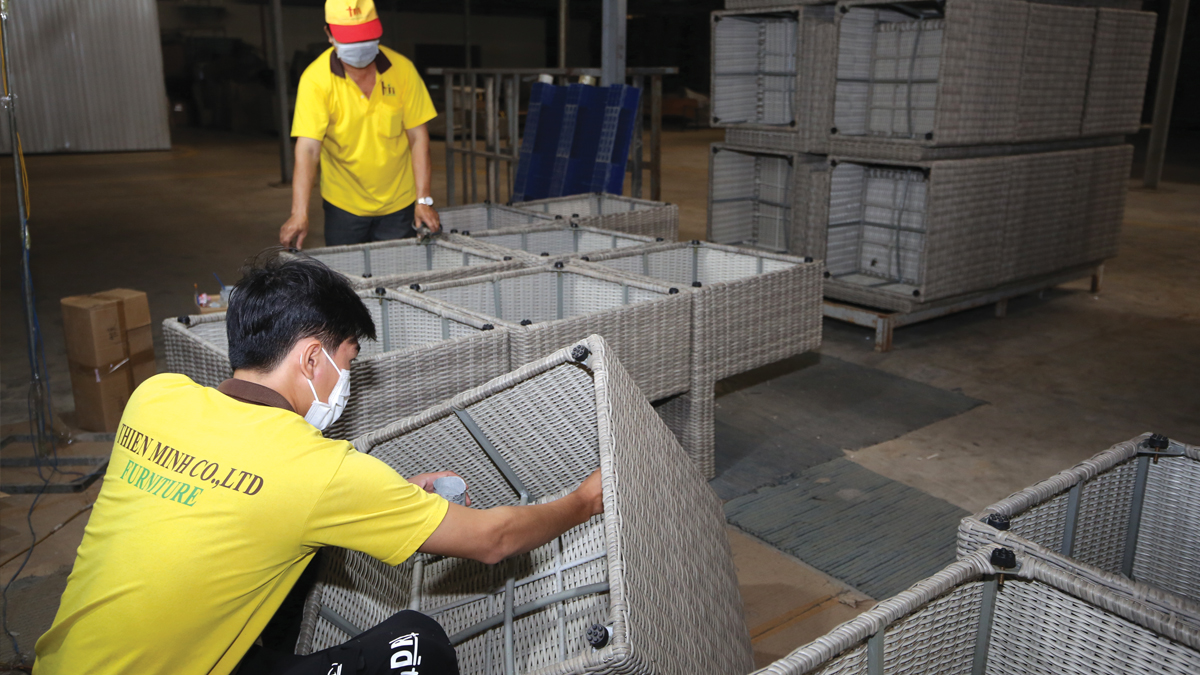
Forexco Quang Nam, one of Vietnam’s first six FSC-certified sustainable forestry companies, has been a pioneer in sustainable practices since 2006. Its four manufacturing plants utilize automated drying systems and fine-dust filtration technology, tripling productivity with an optimized workforce. The company’s shift to using plantation timber in the early 2000s created jobs in mountainous communities while adding value to native acacia wood.
Despite positive indicators, feedback from major European and North American clients suggests that market recovery remains slow. “The furniture industry will still face challenges in 2025,” Thu cautioned. “Without preparing for the next 3–5 years, companies risk missing future growth opportunities.”
As a result, Vietnamese furniture enterprises are continuously enhancing customer outreach, market development, and brand storytelling. Investments in packaging design, website development, and digital marketing are helping companies build stronger connections with domestic and international consumers alike.
By Quynh Yen